
What Sweat Really Is: The Fluid That Keeps You Alive in the Heat
- Benjamin Payson
- Mar 11
- 3 min read

No body likes to sweat, especially when you have a light colored shirt on and in the middle of a job interview, and thus most people chalk it up to an inconvenivnce.
It’s not.
Sweat is one of the most sophisticated cooling systems in biology, a precisely engineered fluid designed to protect your brain, heart, and muscles from overheating.
Let’s break down what sweat actually is, what it contains, why it matters, and how much your body can produce.
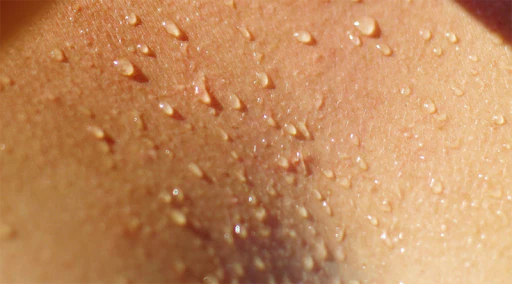
1. What Is Sweat Made Of?
Sweat is not “just water.” It’s a dynamic electrolyte solution produced by specialized glands in your skin.
There are two primary sweat glands:
Eccrine glands (temperature regulation)
Apocrine glands (stress-related, scent-associated)
For heat regulation and exercise, we’re talking about eccrine sweat.
Primary Components of Sweat
Component | Typical Concentration | Why It’s There |
Water | ~99% | Heat transfer medium |
Sodium (Na⁺) | 20–80 mmol/L | Major electrolyte lost in heat |
Chloride (Cl⁻) | Similar to sodium | Maintains electrical balance |
Potassium (K⁺) | 3–15 mmol/L | Muscle and nerve function |
Magnesium (Mg²⁺) | Small amounts | Muscle relaxation & enzyme function |
Calcium (Ca²⁺) | Trace | Cellular signaling |
Lactate | Variable | Byproduct of metabolism |
Urea & ammonia | Trace | Waste removal |
Sweat begins as a fluid similar to blood plasma. As it travels through the sweat duct, sodium and chloride are partially reabsorbed.
This is why trained, heat-acclimated athletes lose less sodium per liter of sweat¹.
2. What Purpose Does Sweat Serve?
1. Thermoregulation (Primary Role)
When sweat evaporates, it absorbs heat from your skin.
The physics are powerful:
The latent heat of vaporization of water is ~580 kcal per liter²
That means evaporating 1 liter of sweat removes ~580 kcal of heat from your body
For perspective: Running 10 miles may produce ~900–1,200 kcal of metabolic heat. Sweating is how you survive that effort in warm conditions.
Without sweat:
Core temperature rises rapidly
Performance declines
Heat exhaustion and heat stroke risk increase dramatically
2. Cardiovascular Protection
Sweating allows your body to shunt blood to the skin for cooling without overwhelming internal temperature regulation.
This reduces strain on:
The heart
The central nervous system
Working muscles
When hydration and electrolytes drop too low, plasma volume decreases³ meaning:
Heart rate rises
Stroke volume falls
Performance collapses
3. Electrolyte Balance & Neural Function
Sodium and potassium regulate:
Muscle contraction
Nerve impulses
Fluid balance between cells
If sodium losses aren’t replaced during prolonged heat exposure:
Cramping
Headaches
Dizziness
Reduced cognitive function
In extreme cases, excessive water intake without sodium replacement can cause exercise-associated hyponatremia⁴.
3. How Much Sweat Does the Human Body Have?
You don’t “store” sweat like a tank. But you do have the infrastructure to produce it rapidly:
2–4 million eccrine sweat glands across your body⁵
Highest density: palms, soles, forehead
4. How Fast Can We Produce Sweat?
Sweat rates vary dramatically by temperature, body size, training status, and acclimatization.
Typical Sweat Rates
Condition | Sweat Rate |
Light activity, cool weather | 0.3–0.5 L/hr |
Moderate exercise, warm | 0.8–1.2 L/hr |
Hard exercise, hot (80–95°F) | 1.5–2.0 L/hr |
Elite endurance athletes in extreme heat | 2.5–3.0+ L/hr⁶ |
Yes, some athletes can lose over 3 liters per hour in extreme heat.
Over a 2-hour race in 90°F:
You could lose 4–5+ liters
That’s over 8–10 pounds of bodyweight
A 2% bodyweight loss from dehydration is enough to impair endurance performance⁷.
5. Fun Sweat Facts
Sweat itself is odorless, bacteria on your skin create odor.
Heat acclimation increases total sweat rate but decreases sodium concentration.
Highly trained endurance athletes begin sweating earlier in exercise.
You can lose 1,000–2,000 mg of sodium per liter of sweat depending on genetics.
In very dry climates, sweat evaporates so efficiently you may not notice how much you’re losing.
6. Sweat, Performance, & Replacement
Sweat is a survival tool, but it’s also a resource drain.
Every liter lost represents:
Water
Sodium
Potassium
Plasma volume
Performance potential
If you only replace water:
Blood sodium drops
Fluid balance becomes diluted
Performance and safety suffer
If you replace water + electrolytes:
Plasma volume is preserved
Heart rate drift is reduced
Cooling efficiency remains high
Output stays stable longer
This is why hydration in the heat isn’t just about drinking, it’s about replacing what sweat actually contains.
The Takeaway
Sweat is not a weakness, its not inefficiency.
It is a precision cooling system made of water and electrolytes designed to:
Protect your brain
Preserve your heart
Sustain muscular output
Keep you alive in extreme heat
The more you understand what sweat really is, the more intelligently you can train, hydrate, and perform.
Sources
Adaptations to heat acclimation and sweat sodium concentration — Journal of Applied Physiology
Latent heat of vaporization of water — Thermodynamics principles
Plasma volume shifts during dehydration — Medicine & Science in Sports & Exercise
Exercise-associated hyponatremia — New England Journal of Medicine
Sweat gland density and distribution — Physiological Reviews
Maximum sweat rates in trained athletes — Sports Medicine
Dehydration and endurance performance — American College of Sports Medicine Position Stand


Comments