
Working in the Heat: How Many Breaks Do You Really Need?

On a construction site, it is easy to think about breaks around the job: finish the roof section, unload the truck, or get through the next concrete pour.
Heat safety calls for planning recovery around the conditions, too.
There is no single break schedule that keeps every worker safe. How often you need to stop and how long you need to recover depend on the heat, the task, your clothing, and how accustomed you are to those conditions.¹²
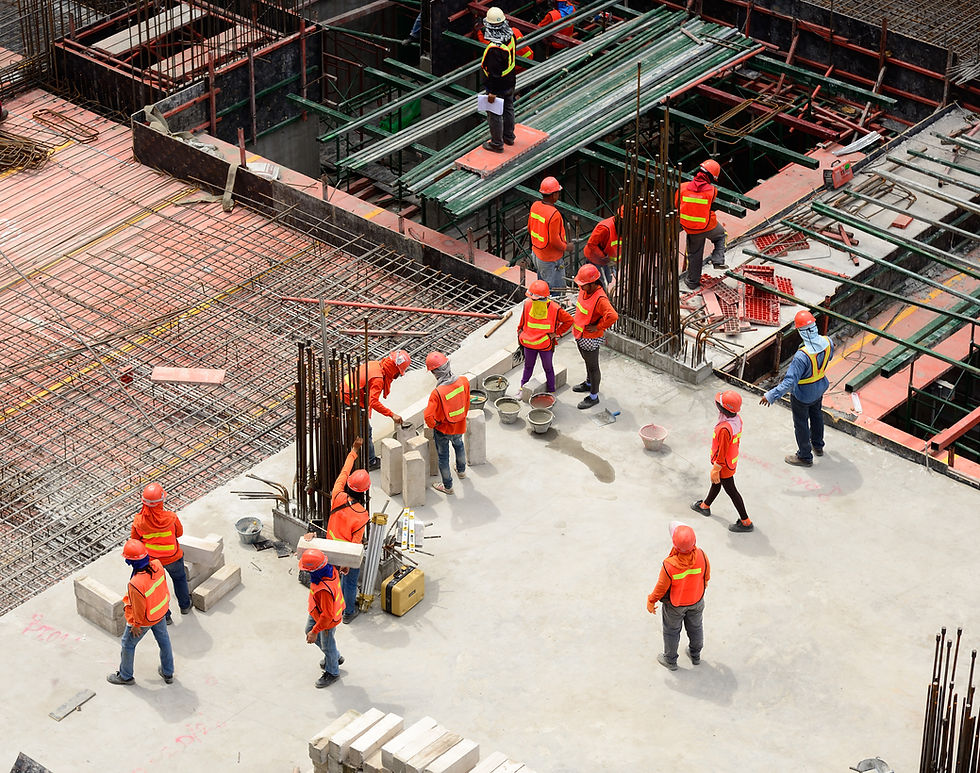
Why the same temperature can mean different risks
Physical labor generates body heat. Add direct sunlight, humidity, hot surfaces, and protective equipment, and the body faces a greater cooling challenge. High humidity makes cooling through sweat evaporation more difficult.¹
That is why a weather app cannot tell the whole story. A worker carrying materials on a sunny roof can face a different exposure from someone doing lighter work in the shade.
OSHA recommends assessing workplace heat with wet bulb globe temperature (WBGT), which accounts for air temperature, humidity, radiant heat, and air movement. Workload, clothing, and acclimatization must then be considered when choosing protective measures. WBGT is a different measurement from air temperature or heat index; the numbers are not interchangeable.¹
So, how much rest might workers need?
OSHA advises hourly breaks when heat stress exceeds its referenced occupational exposure limits, with longer or more frequent recovery as heat stress rises. That does not mean one short break each hour is sufficient for every job.²
To illustrate the range, NIOSH publishes this sample guidance for heavy work:³
Adjusted temperature in the NIOSH sample* | Work per hour | Rest per hour |
95°F | 45 minutes | 15 minutes |
100°F | 30 minutes | 30 minutes |
105°F | 15 minutes | 45 minutes |
These are examples, not a ready-to-use construction-site schedule. The chart assumes normal clothing, physically fit, well-rested, fully hydrated workers under 40, 30% humidity, and perceptible air movement. Its temperature requires adjustments for sun and humidity; it is neither heat index nor WBGT.³
For example, the chart adds 13°F for full sun. An 87°F day in full sun at the baseline humidity therefore reaches its 100°F adjusted row. Heavy work includes extended shoveling and carrying loads of 40 pounds or more.³
The practical lesson: physically demanding work may require substantial recovery well before the air temperature reaches triple digits. A qualified safety professional should select the schedule for the actual site, workers, clothing, and tasks.¹³
Where you rest matters
Putting down a shovel while standing beside hot equipment in direct sun offers limited relief.
OSHA recommends a cool recovery location, such as a shaded area, air-conditioned vehicle, or nearby building. Workers may need longer breaks when a cool location is unavailable.²
Plan that space before work starts. Make it accessible, and build recovery into the work schedule so workers can use it without waiting for a task to end.
A scheduled break is also not a restriction on extra rest: NIOSH recommends allowing rest and water breaks whenever a worker feels heat discomfort.⁴
New workers need a different approach
Someone starting a hot job should not immediately follow the same exposure schedule as an experienced, acclimatized coworker.
NIOSH recommends gradually increasing heat exposure over 7–14 days. For new workers, its suggested starting point is no more than 20% of the usual duration of work in the heat on day one, increasing by no more than 20% each additional day. Unacclimatized workers need lighter duties and longer, more frequent recovery.⁴
Being fit does not remove the need to adjust to working in the heat.¹⁴
Hydration belongs throughout the shift
Water should be close to the work area, and drinking should happen regularly throughout the shift.
For moderate activity in heat lasting less than two hours, NIOSH suggests about 8 ounces of water every 15–20 minutes. When sweating continues for several hours, electrolyte-containing drinks can help replace losses. Fluid needs vary; NIOSH generally advises not exceeding six cups per hour.⁴
Hydration supports a heat-safety plan. It does not replace cooling, workload adjustments, or recovery time.²⁴
Symptoms override the schedule
A worker with headache, dizziness, nausea, or unusual weakness should stop work, move to a cool area, and get help. Suspected heat exhaustion warrants medical evaluation; someone should stay with the worker.⁵
Confusion, slurred speech, seizures, or loss of consciousness can signal heat stroke. Call 911 and begin rapid cooling immediately while help is coming. Stay with the person. Heat stroke can occur while someone is still sweating, so dry skin is not a requirement for recognizing an emergency.⁵
At Heat Hydration, we believe planning for a hot shift means making water, cooling, and recovery part of how the job gets done. Give the crew a clear break plan before work begins, along with the support to stop sooner when they need to.
Sources
Occupational Safety and Health Administration (OSHA). Heat Hazard Recognition. Read source.
Occupational Safety and Health Administration (OSHA). Water. Rest. Shade. Read source.
National Institute for Occupational Safety and Health (NIOSH). (2017). Heat Stress: Work/Rest Schedules. DHHS (NIOSH) Publication No. 2017-127. Read source.
National Institute for Occupational Safety and Health (NIOSH). Workplace Recommendations. Read source.
National Institute for Occupational Safety and Health (NIOSH). Heat-related Illnesses. Read source.


Comments